
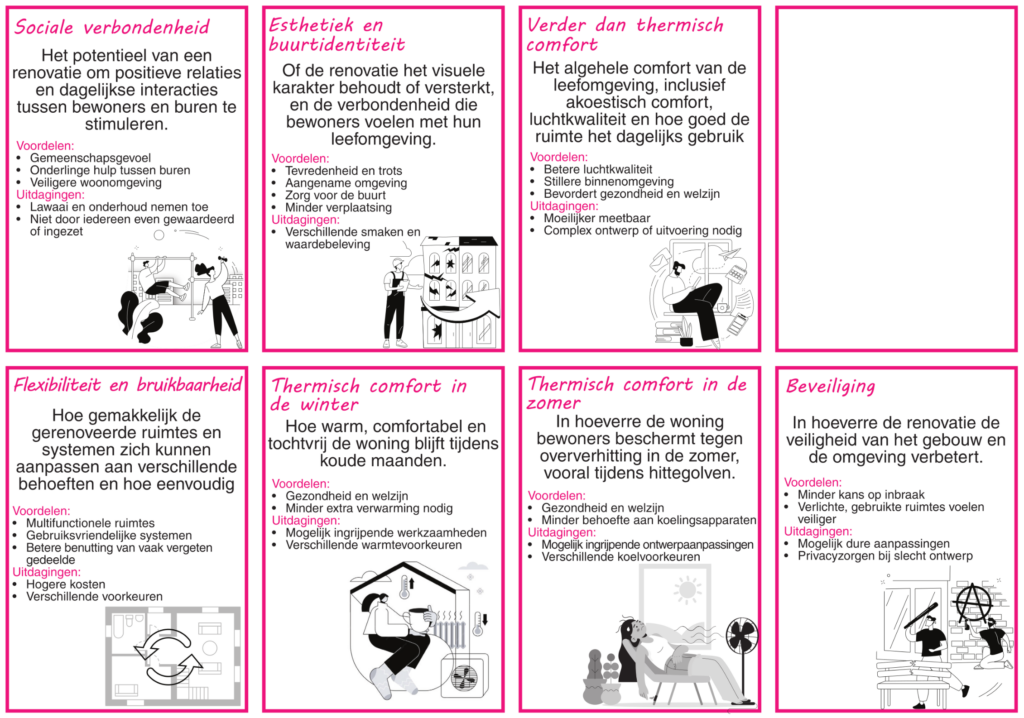
In residential renovation, decisions are often dominated by technical and financial considerations, while residents' everyday concerns — comfort, affordability, health, accessibility, recognition of diverse household practices — remain in the background. Through Just Prepare, we developed a card-based serious game, the RenOlympics, together with a set of supporting materials, to help professionals, researchers, and policy actors reflect on how justice can be integrated into renovation decision-making from the earliest design phase.
The toolkit was used in two co-creation workshops in 2026, bringing together municipalities, housing associations, designers, consultants, resident advocates, and researchers. Participants were invited to challenge current renovation practices and to centre residents' needs and concerns in every choice they made during the game.

 EN
EN  NL
NL