In disadvantaged neighbourhoods, residents prioritise comfort, safety, and liveability over energy savings. Renovation planning, however, rarely reflects this. Early design choices – such as which measures to select, in what combination, and in what sequence – do have direct consequences for residents’ daily lives, financial burdens, and sense of being heard.
This multi-criteria approach helps ensure that renovation strategies respond not only to technical feasibility, but also to what is fair and meaningful for residents. It enables a holistic assessment of renovation measures at both building and neighbourhood scales. It accounts for environmental, economic, and social impacts simultaneously, supporting trade-offs.
In retrofit decision-making, Multi-Criteria Decision Analysis (MCDA) supports the structured comparison of alternative renovation packages through key steps:
Step 1. Define and rank what matters (e.g. energy, costs, comfort, construction impact)
Step 2. Assess the performances of alternative renovation strategies
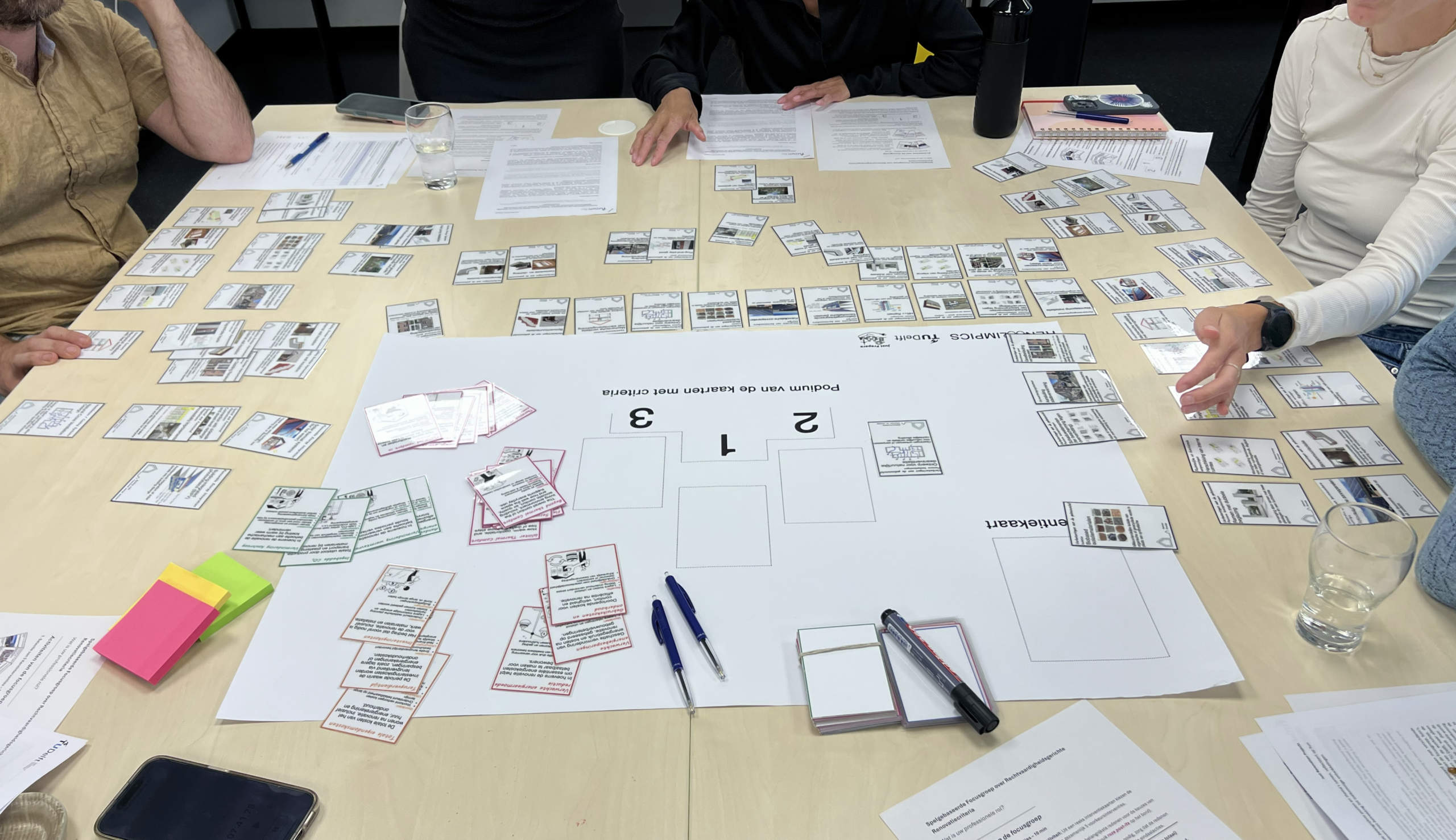
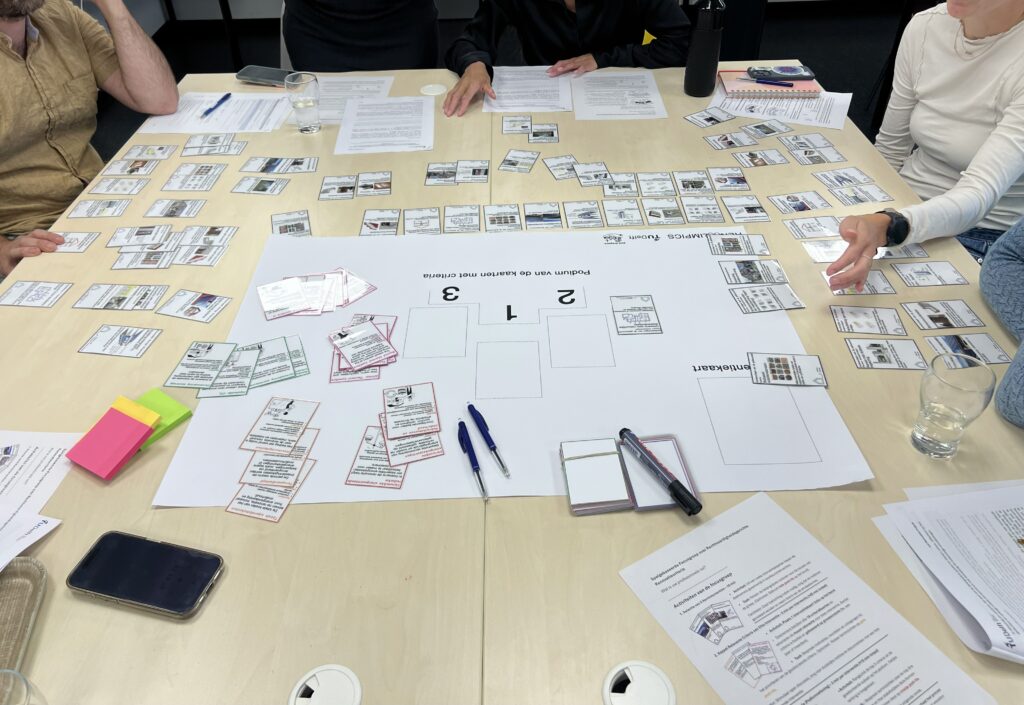
Renolympics: a card-based participatory approach to support collective decisions around renovation strategies
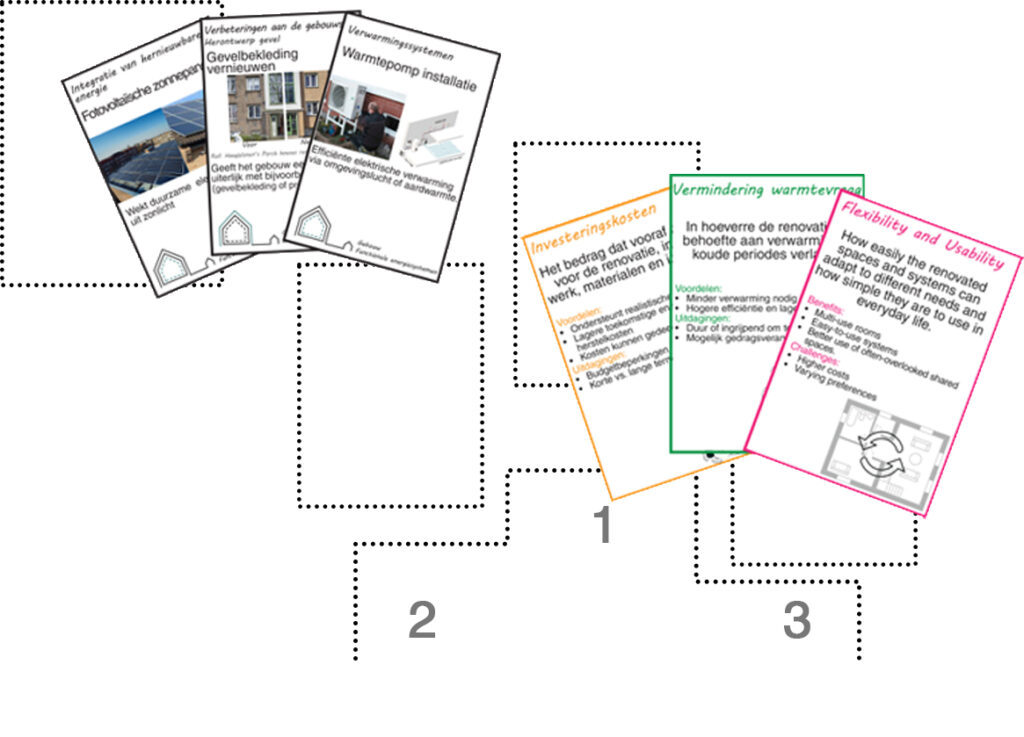
Participatory methods help stakeholders from different disciplines and levels of expertise learn from one another and agree on priorities. The developed game uses two sets of cards:
- Renovation measure cards (e.g., window replacement, insulation, heat pump, solar panels)
- Decision criteria cards (e.g., cost, comfort, environmental impact, fairness, liveability)
Participants can combine and compare options, explore their impacts, and discuss trade-offs in an engaging and accessible way, even without technical knowledge.
 NL
 EN