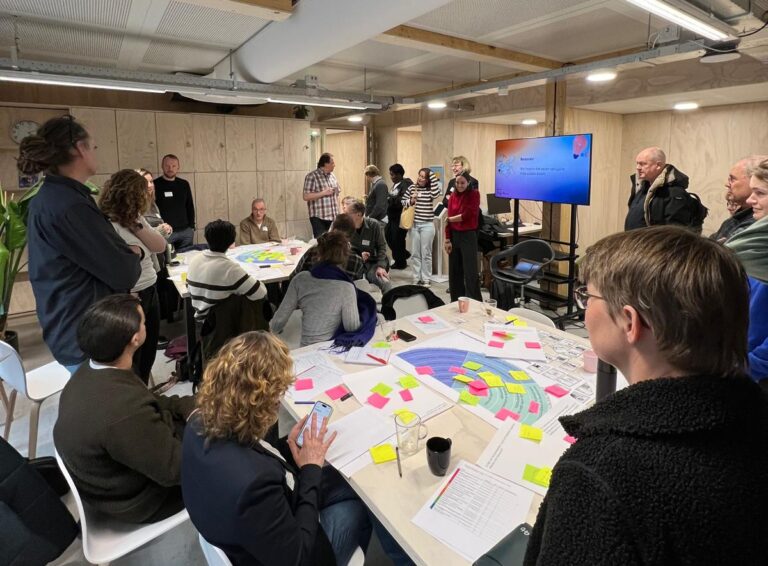
How can energy justice move from an abstract concept to a practical design principle in housing renovation? During the recent ELZO workshop, professionals involved in housing renovation and local energy transition came together to explore this question.
The session convened municipal advisors, housing associations, social organisations, sustainability consultants, technical experts, researchers, innovation managers, and standards professionals. This cross-sector mix enabled an open dialogue on how renovation choices shape everyday living conditions in vulnerable neighbourhoods.
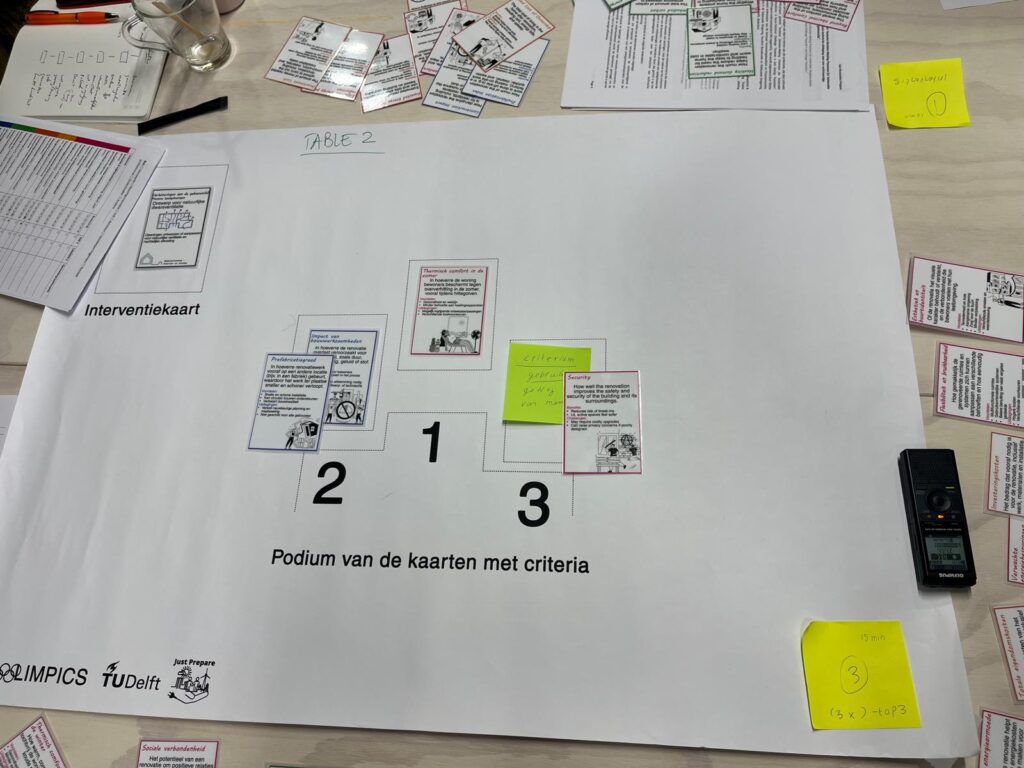
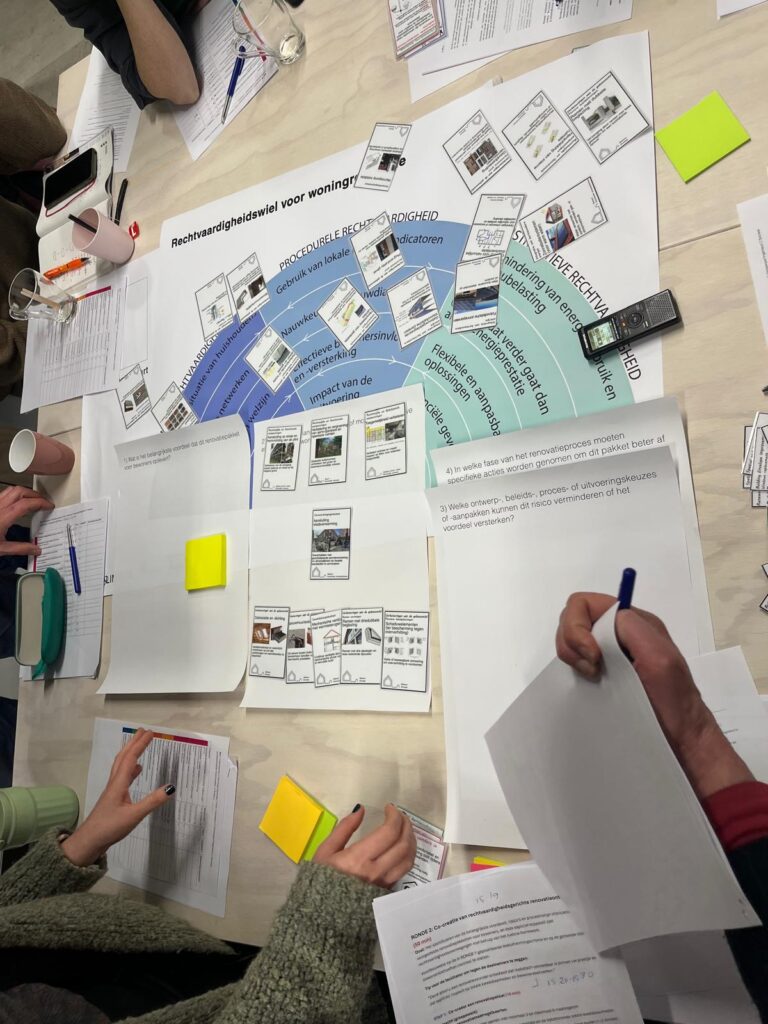
The workshop was structured in two interactive rounds. In the first round, participants prioritised justice-oriented decision-making criteria through a card-based “Renolimpics” exercise. In the second round, they co-created a renovation package and reflected on its benefits, risks, and process implications using the Justice Wheel framework. The aim was to explicitly link renovation design impacts to justice implications by reasoning through decision-making criteria related to aspects such as affordability, comfort, health, inclusion, and cultural recognition.
A key insight of the workshop was that material and spatial design choices are not neutral technical interventions, but processes that can either reproduce injustice or actively support residents’ wellbeing. Decisions such as internal insulation, roof upgrades, ventilation systems, or prefabricated façade panels influence not only energy performance, but also disruption, loss of space, health, recognition, and trust.
Several discussions framed justice not only as selecting the “right” interventions, but also as ensuring they are executed and monitored well. Participants cautioned against overly complex technical solutions, advocating for simpler, more intuitive systems, particularly in social housing. Summer thermal comfort and enabling correct, safe user behaviour were identified as core justice concerns.
Participants were also intrigued by how a single technical renovation measure could activate multiple justice dimensions. Solar panels, for example, were seen not only as energy solutions but as potential catalysts for local social networks. Similarly, insulation and adequate ventilation were linked to summer comfort, health, and space use, underscoring the broader social implications of technical design choices.

 EN
EN  NL
NL